
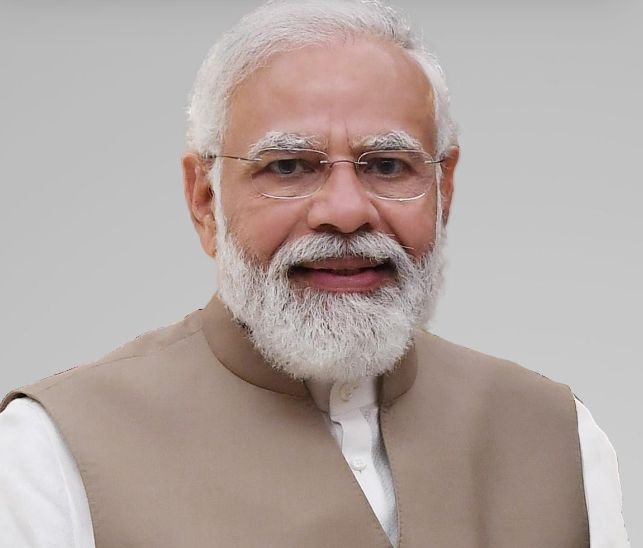
Narendra Modi stands as one of India’s most influential leaders in modern history. Born on September 17, 1950, in Vadnagar, Gujarat, he rose from simple beginnings to become the Prime Minister of India. His journey reflects determination and service to the nation. Modi joined the Rashtriya Swayamsevak Sangh early in life, which shaped his views on nationalism. He entered politics through the Bharatiya Janata Party and served as Chief Minister of Gujarat from 2001 to 2014. In 2014, he led his party to a major win in national elections, becoming Prime Minister. He won re elections in 2019 and 2024, making him the longest serving non Congress Prime Minister. As of November 14, 2025, Modi is 75 years old and continues to guide India toward growth and global standing. His leadership focuses on economic changes, social programs, and strong foreign ties. This biography explores his life stages to help readers understand his path and contributions.
Early Life
Narendra Modi grew up in a small town called Vadnagar in Gujarat. He was the third child among six siblings in a family from the Ghanchi community, which falls under Other Backward Classes. His father, Damodardas Mulchand Modi, ran a tea stall near the local railway station. His mother, Hiraben Modi, managed the household and supported the family. Modi often helped at the tea stall during his childhood, learning the value of hard work from a young age. The family lived in a modest home, facing typical challenges of rural life in post independence India.
As a boy, Modi showed interest in reading and public speaking. He joined local debates and theater groups, which built his confidence. Inspired by stories of freedom fighters, he developed a sense of patriotism early on. In the 1960s, Modi became involved with the Rashtriya Swayamsevak Sangh shakhas, where he learned discipline and community service. These experiences formed the foundation of his character. After finishing school in Vadnagar, Modi left home briefly to travel across India, visiting places like the Himalayas and religious sites. This period of self discovery lasted about two years, from 1968 to 1970, and strengthened his resolve to serve society. His early life teaches lessons on resilience and humility, showing how ordinary roots can lead to extraordinary achievements.
Education
Narendra Modi’s formal education began in Vadnagar, where he completed his schooling up to higher secondary level in 1967. He then pursued higher studies through distance learning. In 1978, he earned a Bachelor of Arts degree in Political Science from Delhi University. Five years later, in 1983, he obtained a Master of Arts degree in Political Science from Gujarat University, achieving first class honors.
Modi’s education faced some public scrutiny over the years, with questions about his degrees arising during election campaigns. In 2016, both universities confirmed the authenticity of his qualifications through official records. While not attending traditional full time colleges, Modi balanced his studies with active involvement in social and political activities. He credits his learning to real world experiences, such as his time with the Rashtriya Swayamsevak Sangh, where he gained knowledge on leadership and organization. This blend of formal education and practical training prepared him for a career in public service. Today, Modi encourages youth to focus on skill development alongside academics, as seen in his books like Exam Warriors, published in 2018.
Personal Life
Narendra Modi’s personal life remains private and focused on his duties. In 1968, at age 18, he entered an arranged marriage with Jashodaben Chimanlal, a teacher from a nearby village. The couple separated soon after, and Modi has lived a life dedicated to public service since then. They have no children, and Jashodaben lives independently in Gujarat. Modi has mentioned this aspect of his life in election affidavits, emphasizing his commitment to the nation over family ties.
Modi follows a simple lifestyle. He is a strict vegetarian and practices yoga daily for health. Rising early, he maintains a routine that includes meditation and exercise. His interests include writing poetry and books on topics like leadership and environment. Modi authored several works, including Karmayog in 2007 and Jyotipunj in 2008, which highlight his inspirations from Rashtriya Swayamsevak Sangh figures. He enjoys connecting with people through his monthly radio show, Mann Ki Baat, started in 2014. In his free time, Modi reads about history and technology. His mother, Hiraben, passed away on December 30, 2022, at age 99, and Modi often spoke of her influence on his values. Overall, Modi’s personal choices reflect discipline and devotion to India’s progress.
Net Worth
Narendra Modi’s net worth comes from his savings, investments, and assets declared in official documents. As per his 2024 election affidavit, his total assets stood at about 3.02 crore rupees. This includes bank deposits, gold jewelry worth around 2.67 lakh rupees, and four gold rings. He owns no immovable property like land or houses, living in the official Prime Minister’s residence at 7 Lok Kalyan Marg in New Delhi.
Modi’s income mainly comes from his salary as Prime Minister, which is 1.66 lakh rupees per month, plus allowances. He donates much of his earnings to public causes, such as the Prime Minister’s National Relief Fund. In past years, he auctioned personal gifts received during official visits, raising funds for initiatives like Clean Ganga. Estimates for 2025 suggest his net worth remains modest, around 3 to 5 crore rupees, based on consistent declarations. Unlike many politicians, Modi has no shares in companies or luxury vehicles. His financial transparency aligns with his image of simplicity and accountability in public life.
Entry into Politics
Narendra Modi’s political journey began in the 1970s with the Rashtriya Swayamsevak Sangh. He became a full time pracharak in 1971, working on grassroots activities in Gujarat. During the Emergency period from 1975 to 1977, imposed by then Prime Minister Indira Gandhi, Modi went underground to distribute literature and support opposition leaders. This experience honed his organizational skills.
In 1985, Modi joined the Bharatiya Janata Party, a new political outfit formed from the Bharatiya Jana Sangh. He started as a party worker, handling tasks like election campaigns. By 1987, he became the organizing secretary for Gujarat. Modi played a key role in the 1990 Ram Rath Yatra led by Lal Krishna Advani, which boosted the party’s national profile. In 1995, the Bharatiya Janata Party won power in Gujarat, and Modi contributed to that success through strategic planning. He rose to become the party’s national secretary in 1998, overseeing several states. These early roles built his reputation as a dedicated and effective leader, setting the stage for higher responsibilities.
Chief Minister of Gujarat
Narendra Modi took oath as Chief Minister of Gujarat on October 7, 2001, replacing Keshubhai Patel. His tenure lasted until May 22, 2014, covering three terms after elections in 2002, 2007, and 2012. Modi focused on rebuilding the state after the 2001 Bhuj earthquake, which killed thousands and damaged infrastructure.
Under his leadership, Gujarat saw rapid economic growth. Annual GDP averaged over 10 percent, higher than the national figure. Modi introduced the Vibrant Gujarat Global Summit in 2003, attracting investments from around the world. Sectors like manufacturing, agriculture, and renewable energy thrived. He improved irrigation through projects like the Sardar Sarovar Dam, benefiting farmers. Education and health initiatives, such as Kanya Kelavani for girls’ schooling, raised literacy rates.
However, his time included the 2002 riots following the Godhra train incident on February 27, 2002. Over 1,000 people died in the violence. Investigations, including a Special Investigation Team in 2012 and Supreme Court rulings in 2022, cleared Modi of wrongdoing. Despite controversies, Modi’s governance model emphasized development and efficiency, earning praise for transforming Gujarat into a model state.
Prime Ministership
Narendra Modi became India’s 14th Prime Minister on May 26, 2014, after the Bharatiya Janata Party won 282 seats in the Lok Sabha elections. He contested from Varanasi and won by a large margin. His second term started on May 30, 2019, with an even stronger mandate of 303 seats. In 2024, the National Democratic Alliance, led by his party, secured victory again, and Modi took oath for a third term on June 9, 2024.
As Prime Minister, Modi centralized decision making through bodies like the Prime Minister’s Office. He launched digital initiatives to streamline government services. Foreign policy under him strengthened ties with countries like the United States, Japan, and Israel. Modi hosted the G20 Summit in New Delhi on September 9 to 10, 2023, showcasing India’s global role. In defense, he promoted self reliance with programs like Atmanirbhar Bharat, started in 2020.
Challenges included the COVID 19 pandemic from 2020 to 2022, where India rolled out one of the world’s largest vaccination drives. Economic slowdowns and unemployment issues persisted, but growth rebounded to over 7 percent by 2025. Modi’s leadership style involves direct public engagement, like through social media and town halls. As of 2025, he continues to push for India’s development into a developed nation by 2047.
Key Policies and Achievements
Narendra Modi’s government introduced several key policies to drive change.
First, the Swachh Bharat Mission, launched on October 2, 2014, aimed to make India clean and open defecation free. By 2019, over 100 million toilets were built, improving health and sanitation.
Second, the Goods and Services Tax, implemented on July 1, 2017, unified India’s tax system, boosting revenue and ease of business.
Third, demonetization on November 8, 2016, withdrew high value notes to curb black money and promote digital payments.
Fourth, the abrogation of Article 370 on August 5, 2019, integrated Jammu and Kashmir fully into India, creating two union territories.
Fifth, the Pradhan Mantri Ujjwala Yojana, started in 2016, provided free LPG connections to poor households, reaching over 80 million by 2025.
Sixth, Make in India, initiated in 2014, encouraged manufacturing and foreign investment, leading to growth in electronics and automobiles.
Seventh, the Citizenship Amendment Act, passed on December 11, 2019, offered citizenship to persecuted minorities from neighboring countries.
Eighth, the farm laws of 2020 aimed to reform agriculture but were repealed on November 19, 2021, after protests.
Ninth, India’s space achievements under Modi include the Chandrayaan 3 moon landing on August 23, 2023, making India the fourth nation to achieve this.
Tenth, environmental efforts like the International Solar Alliance, co founded in 2015, promote renewable energy globally.
These policies have mixed results, with successes in infrastructure and criticisms on implementation. Modi’s achievements include lifting millions out of poverty and elevating India’s global image.
Conclusion
Narendra Modi’s biography tells a story of rise through dedication and vision. From helping at a tea stall to leading the world’s largest democracy, his life inspires many. He transformed Gujarat and now shapes India’s future with bold steps. While facing debates, Modi’s focus on development and nationalism remains strong. As India moves toward 2047, his legacy will influence generations. Readers can learn from his emphasis on hard work, simplicity, and service.
FAQs
How old is Narendra Modi?
He is 75 years old, born on September 17, 1950.
Who is Narendra Modi’s wife?
His wife is Jashodaben Chimanlal Modi, married in 1968, but they have lived separately since then.
What is Narendra Modi’s education?
He holds a Bachelor of Arts in Political Science from Delhi University (1978) and a Master of Arts in Political Science from Gujarat University (1983).
How did Narendra Modi become Prime Minister?
He led the Bharatiya Janata Party to victory in the 2014 Lok Sabha elections and was sworn in on May 26, 2014. He won re elections in 2019 and 2024.
What is Narendra Modi’s net worth?
Approximately 3 to 5 crore rupees as of 2025, based on his election affidavits and assets.